BiPAP Tubing About
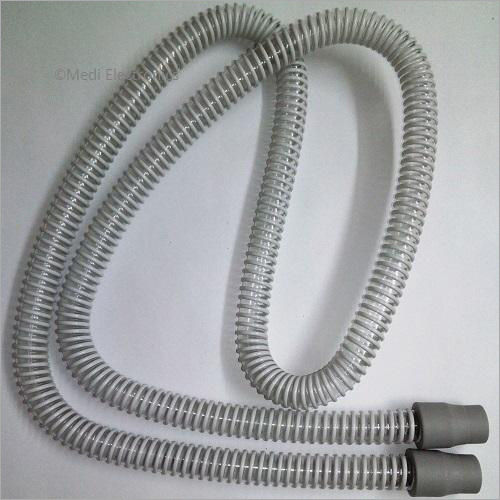
Our offered BiPAP Tubing is widely appreciated by our valued customers for their excellent quality. These are highly beneficial because it is an extension of the very same process which humidifier of the CPAP machine used to moisten the air. Our provided BiPAP Tubing is praised for their heating plate in the machine heats the water as the humidifier passes it through standard corrugated CRAP tubing or can be minimized by using a heated hose or a tubing wrap found on our hose comfort page.
Universal Compatibility & Medical-Grade SafetyWith its 22 mm standard cuffs and universal fit, this BiPAP tubing is engineered to connect seamlessly with virtually all major BiPAP and CPAP devices. Manufactured from medical-grade polyvinyl chloride, this tubing is not only completely latex-free and odorless but also adheres to stringent ISO and CE safety protocols, making it a dependable choice for both adult and pediatric respiratory therapy.
Flexible Design for Patient ComfortThe cylindrical, corrugated construction ensures flexibility and non-collapsibility, maintaining a consistent airflow path between the device and patient mask. Its smooth interior surface prevents accumulation of particulates, facilitating easier cleaning and reducing airflow resistance. The 1.8-meter length offers ample reach for patient movement and comfort during use.
Easy Maintenance & Sterilization OptionsBiPAP tubing is available in both disposable and reusable configurations. The reusable type is autoclavable and hand-washable, supporting hospital protocols or home care routines. Each tube is individually polybagged, assuring maximum hygiene until point of use, and features a shelf life of up to 5 years when unopened.
FAQs of BiPAP Tubing:
Q: How do I clean and sterilize reusable BiPAP tubing with a 22 mm standard cuff?
A: Reusable BiPAP tubing can be cleaned by hand-washing with mild soap and warm water or sterilized through autoclaving. Ensure the tubing is thoroughly dried before reuse to prevent microbial growth. Always follow your healthcare providers or manufacturers recommended cleaning protocols to maintain optimal hygiene.
Q: What makes this BiPAP tubing suitable for both adults and pediatric patients?
A: The tubings universal 22 mm standard cuffs, flexible medical-grade construction, and compatibility with most BiPAP/CPAP devices make it suitable for use across all age groups. Its translucent white or clear color coding also allows for easy visual inspections, ensuring suitability for both adult and pediatric applications.
Q: When should I choose disposable versus reusable BiPAP tubing?
A: Disposable tubing is ideal for single-patient use in clinical or emergency settings to prevent cross-contamination. Reusable tubing is preferred when regular sterilization is feasible, such as in home care or long-term hospital environments, offering cost-effectiveness with repeated use.
Q: Where can the BiPAP tubing be used effectively?
A: This tubing is suitable for use in hospitals, clinics, and home settings across India. It connects BiPAP machines to patient masks for respiratory therapy and can be integrated with humidification systems for added comfort. Its robust construction ensures reliability in various healthcare environments.
Q: What benefits does this BiPAP tubing offer compared to standard options?
A: The tubing combines features such as a flexible, non-collapsible, smooth interior with ISO and CE compliance, medical-grade latex-free PVC material, and odor-free performance. These attributes ensure a comfortable, safe, and hygienic connection, enhancing therapy effectiveness for both clinicians and patients.
Q: How does the tubing design help in maintaining optimal airflow during therapy?
A: With its non-collapsible, corrugated exterior and smooth inner lining, the tubing maintains consistent airflow and minimizes resistance. This ensures stable pressurization ranging from 0-30 cm H2O during therapy, optimizing respiratory support for patients.
Q: What is the process for connecting the BiPAP tubing to a machine and mask?
A: Simply attach one end of the 22 mm standard cuff to the BiPAP or CPAP device outlet, then connect the other end to the patient mask inlet. Ensure all connections are secure and check for any air leaks before starting therapy. The tubings universal design makes setup quick and straightforward.





 Send Inquiry


 Send Inquiry